Some of my writing projects are linked below. Many of these projects focus on post-industrial places in the Great Lakes Region.
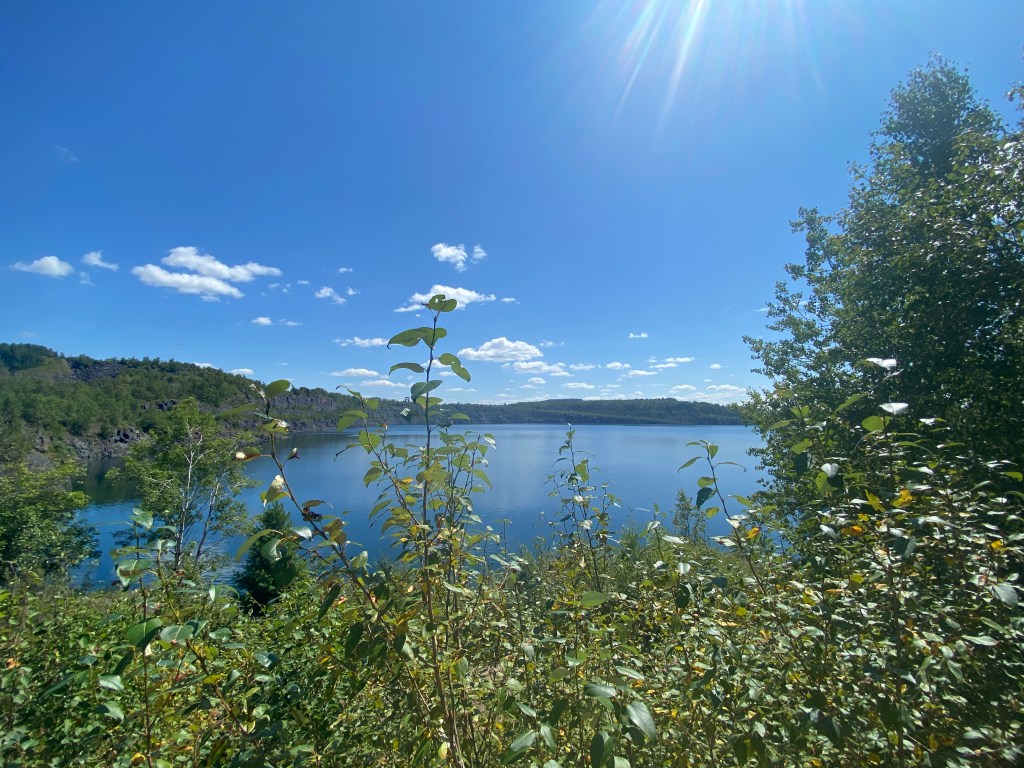
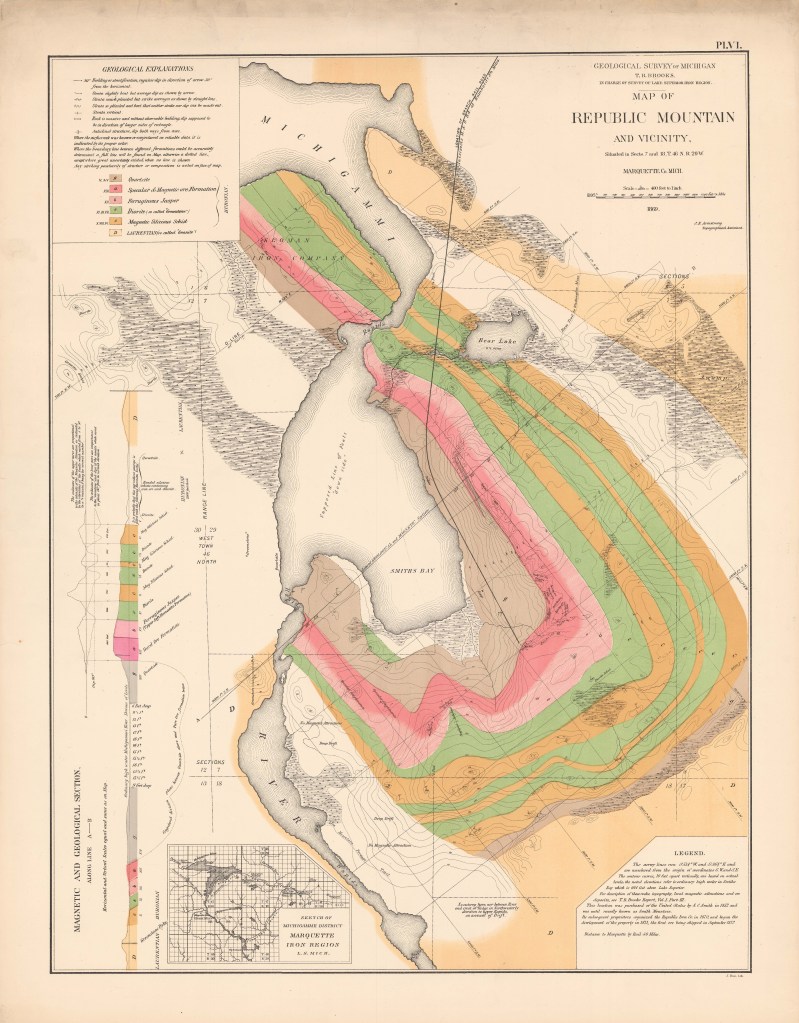
Read my honors thesis for the Environmental and Urban Studies Major on the history of the former iron mining town of Republic, MI!
Abstract: Today, iron is at the foundation of many of society’s technological systems, yet we rarely stop to consider the mines from which iron ore was extracted. Many of these mine sites have halted extraction, rendering their surrounding environments former mining towns. Previous scholarship on mining history has challenged the notion that mines simply close because they run out of ore, instead advancing arguments that centralize the roles of market pressure, government policy, or technological shortcomings. However, this patchwork of explanations is discordant as the aforementioned list has few unifying characteristics. This project attempts to reconcile these fragmented explanations by advancing the framework of “vertical and horizontal geographies of extraction” which embraces the messy and multifaceted processes involved in the development and closure of mines. Horizontal geography studies the connection between mines and markets to primarily understand the role market pressures play in the development and closure of mines. On the other hand, vertical geography analyzes the geologic knowledge and technology central to extraction. The broad categories of horizontal and vertical geographies include the processes behind all explanations for mine closure and allows for analysis of the interaction between different pressures. This project applies the geographies of extraction framework to the Republic Mine — a former iron ore mine in the Upper Peninsula of Michigan (UP). Using archival research, with an emphasis on maps, this paper tracks the development of horizontal and vertical systems at the Republic Mine, from the first plans for mining in 1869 until the mine closed for the final time in 1996. This paper finds that a combination of market pressures, geologic knowledge, and technological advancement guided the Republic Mine’s development. Moreover, market pressures augmented vertical components of mine development to intensify the scale of extraction. In addition, this paper finds that the Republic Mine closed two different times for two different reasons: in 1928, the Republic Mine closed because all the ore that could be profitably extracted had been mined; and in 1981, after new technology enabled the mine to reopen, the Republic Mine indefinitely idled because it could not compete with foreign mines (the mine officially closed in 1996). In both cases, markets viewed Republic as a disposable resource. With mining complete, this project urges readers to consider this narrative to move beyond the extractive logics imposed by markets.
I wrote this piece for a class on sensory anthropology. This assignment challenged us to think about how we use our senses to develop a sense of place. I wrote about the sense of place I feel on the Southeast Side of Chicago and at Steelworker’s Park.
I am a coauthor on this policy paper concerning rehabilitation of the Promontory Point in Chicago. The City of Chicago and the Army Corps of Engineers want to close the park for five years to rebuild shoreline revetments, against the community’s wishes. This report was made in a class at the University of Chicago for the Promontory Point Conservancy, a local advocacy group working to protect the public park from closure.
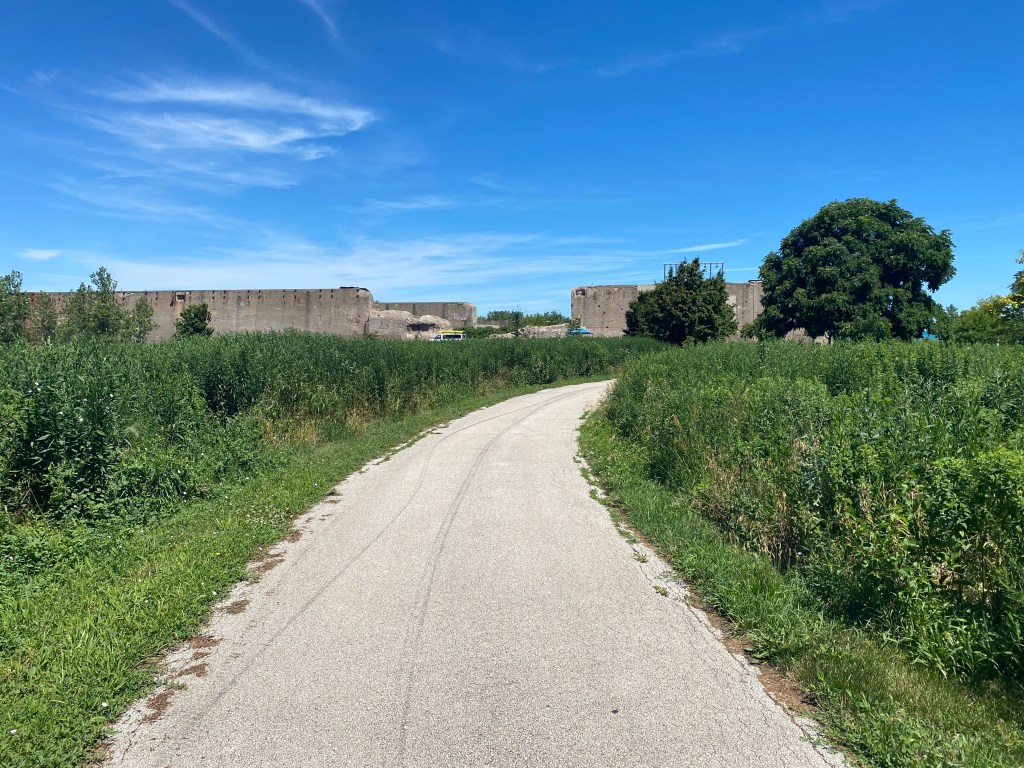
I wrote this article to protest Illinois Governor JB Pritzker’s plan to build a quantum computing campus on the Southeast Side of Chicago. The campus would require $500 million dollars in public subsidies from the state and an additional $180 million from Cook County and the City of Chicago in exchange for a meager 200 jobs. Additionally, the quantum computing campus would gentrify the historically working class and culturally diverse neighborhoods of South Chicago and the East Side.
I wrote this article for my early-American History class on the American political tradition. I think that our politics straddles a line between liberation and colonial control which is extremely relevant given our current political situation.
I wrote this object report on a historic house in Blue Island, IL, for a museum studies course. The house is currently home to the Blue Island Historical Society.
 Owen Castle